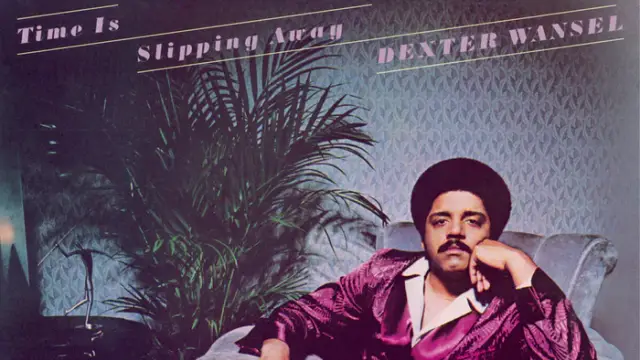
Dexter Wansel and the Architecture of Sound
Picture Sigma Sound Studios on North 12th Street in Philadelphia, sometime in the mid-1970s. The building hums with organized intensity — string players running through charts in one room, a keyboardist adjusting an ARP synthesizer in another, a producer leaning over a console while an arranger marks up a score at a nearby table. This was not a recording studio in the conventional sense. It was closer to a factory of feeling, a laboratory where the emotional frequencies of a city were being mapped and committed to tape. Dexter Wansel worked inside this machine, and in understanding how he worked — what he heard, what he built, what he left behind — it becomes possible to understand something essential about how popular music is actually made, and who, in the long accounting of history, gets credit for making it.
A City That Invented Its Own Frequency
Philadelphia International Records, founded in 1971 by Kenny Gamble and Leon Huff, was not simply a business proposition. It was an ideological act — a deliberate effort to construct a sound that could carry the aspirations of Black America in a register that was sophisticated without being cold, joyful without being frivolous, politically awake without being strident. The label operated from Sigma Sound, and that address functioned less as a headquarters than as a creative commons, a space through which arrangers, session musicians, vocalists, and composers circulated and accumulated into something larger than any individual contribution.
The Sound of Philadelphia — TSOP — was a deliberate architectural project. The lush orchestration, the sophisticated chord movement, the lyrics that addressed structural realities of Black life without abandoning beauty: none of this was accidental. It was a collective aesthetic philosophy, an argument made in music about what elegance and complexity could mean in the hands of Black artists working within a commercial framework but refusing to be entirely defined by it. The rawness of earlier soul was not abandoned so much as refined, given a grander interior.
Philadelphia itself was an active ingredient. The city's specific Black geography — its middle-class strivers, its deep church music tradition, its proximity to the civil rights movement and the cultural institutions of the East Coast — gave the label a distinct social register. The music PIR made was aspirational without being escapist, rooted in community experience while gesturing toward something larger. Beneath every recording was the MFSB house band, whose members provided the structural engine of nearly the entire catalog, creating a sound that was simultaneously composed and improvisational, arranged and alive.
Understanding Wansel requires understanding that Philadelphia International was less a record label than a vertically integrated creative institution. The composers, arrangers, and producers who worked within it were as central to the output as any vocalist whose name appeared on the cover. The sound that emerged from Sigma Sound was genuinely collective — which means that story cannot be told only through its most visible figures.
The Composer in the Machine
Wansel was born in Notion, Maryland in 1950 and came to Philadelphia carrying classical training and an early fluency in jazz harmony — a combination that made him unusually equipped for PIR's orchestral ambitions. Where many soul producers of the era worked intuitively, building arrangements from feel and tradition, Wansel brought a structural literacy that let him think across registers simultaneously: how a string voicing might function harmonically while also carrying an emotional color, how a synthesizer texture could extend an orchestral palette rather than simply replace it.
He joined Philadelphia International in the early 1970s, initially as a keyboardist and arranger before developing into a full composer and producer. His trajectory mirrored the label's own expansion from singles-driven R&B toward album-length conceptual work — a shift that required composers who could think in extended forms and build sonic worlds that sustained attention across an entire side of vinyl. His keyboard style was distinguished by an early embrace of synthesizers at a time when many soul producers treated electronic instruments with suspicion. He heard the synthesizer as an extension of orchestral color rather than a replacement for organic warmth.
His work as an arranger on recordings for Teddy Pendergrass, Lou Rawls, and the O'Jays placed him in the direct current of the label's most commercially and artistically significant output. These were not peripheral assignments. The arrangements Wansel built beneath those performances were structural decisions — choices about density, movement, and emotional temperature that shaped how the listener received every word a vocalist delivered. Yet unlike Gamble and Huff, who operated as public-facing architects of the PIR brand, Wansel worked largely within the institutional interior. His name appeared on album credits and publishing registrations rather than in headline interviews, a pattern common to composers who shape sounds without owning the narrative around them.
Life on Mars, Life in Philadelphia
In 1976, Wansel released *Life on Mars*, an album that stands as one of the stranger and more visionary documents in the Philadelphia International catalog. Fusing the orchestral warmth of TSOP with science fiction thematics and synthesizer textures that had no obvious precedent in contemporary soul, the record anticipated developments in electronic music, ambient soul, and what would eventually be theorized as Afrofuturism — though Wansel arrived at this territory through the specific conditions of a particular studio, a particular city, and a particular musical sensibility rather than through any theoretical program.
The cosmic soul movement — associated with Sun Ra's entire philosophical edifice, George Clinton's mythological funk, and Earth, Wind & Fire's spectacular synthesis — found a quieter, more introverted expression in Wansel's solo work. Where those artists used outer space as a stage for collective ecstasy or political allegory, Wansel treated the cosmos as a space for introspection. His universe was melancholy and searching, less theatrical than contemplative. This distinction mattered: it meant his music reached for something different, and in reaching for it, found a sound that had no exact equivalent anywhere in the genre.
The technical vocabulary of these records — Fender Rhodes voicings that shimmered at the edge of dissonance, ARP synthesizers used for texture and mood rather than melody, string arrangements that layered warmth and unease simultaneously — created a sound world that was genuinely sui generis within the PIR catalog. More abstract and more melancholy than the label's mainstream output, these records occupied a space that the label's commercial logic didn't particularly require but clearly accommodated.
*Voyager*, released in 1978, extended the conceptual frame of its predecessor while deepening Wansel's engagement with longer compositional forms. Suite-like structures rewarded full album listening rather than single extraction — a commitment to the integrity of the complete work that placed him in a tradition of composers who thought in movements rather than in minutes. Neither record achieved commercial breakthrough on original release. Both have accumulated significance through decades of crate-digging and reappraisal, their influence traveling through channels that bypassed the original market entirely.
The Sample as Inheritance
The hip-hop sample canon absorbed Wansel's recordings through precisely the qualities that made them distinctive in their original context: lush string arrangements, Rhodes textures that occupied the emotional middle distance between joy and grief, chord progressions that carried harmonic sophistication without becoming academic. Producers from Philadelphia, New York, and Los Angeles found in these recordings a structural resource — a way of creating emotional depth beneath rap vocals that could not easily be manufactured from scratch. The specific harmonic decisions Wansel made in the 1970s became raw material for producers working across entirely different cultural moments.
Each new sample use recontextualized his harmonic sensibility within a new cultural frame — a form of compositional inheritance that operates independently of direct citation or recognition. The melody or the chord voicing travels forward; the name attached to it may or may not travel with it. The emotional architecture he built became available to subsequent generations as a kind of found infrastructure, load-bearing elements that could support entirely different kinds of cultural construction.
The neo-soul movement of the 1990s and 2000s — associated with D'Angelo, Erykah Badu, and the Soulquarians collective — drew heavily on the Philadelphia International archive as a touchstone for what sophisticated Black popular music could sound like. These artists were engaged in a conscious excavation of a tradition, and the PIR catalog was among the richest sites they dug through. Wansel's work was part of that inheritance even when his name was not invoked, his harmonic sensibility present in the emotional texture of records that would reach audiences far larger than his own.
The mechanism of sampling also raises structural questions that remain unresolved in the music industry's accounting practices. Wansel's case illustrates a broader pattern in which Black composers from the analog era generated enormous downstream cultural value — measured in influence, in aesthetic inheritance, in the emotional vocabulary available to subsequent generations — that was not always matched by financial return or sustained public recognition. The gap between cultural impact and institutional acknowledgment is one of the most persistent features of how the music industry has historically processed its own past.
Collective Authorship and the Invisible Composer
The performer-composer split in popular music credit culture is structural rather than incidental. Vocalists and frontpeople accumulate public identity — faces, voices, stories, interviews — while the composers and arrangers who construct the sonic architecture beneath them remain institutionally invisible, legible primarily to industry insiders and devoted listeners who read liner notes with the attention most people reserve for literature. This pattern is especially pronounced in soul and R&B, where the emotional intensity of performance draws critical attention toward the singer and away from the choices that made that performance possible.
Philadelphia International's internal credit structure concentrated the most visible recognition on Gamble and Huff as label founders and primary songwriters, while the contributions of figures like Wansel, Thom Bell, Bobby Martin, and Norman Harris were often legible only in the secondary record — the publishing registrations, the album credits, the accounts of musicians who worked alongside them. This is not a criticism of Gamble and Huff, whose creative vision was genuinely central to the label's identity. It is an observation about how credit structures in popular music tend to consolidate around the most visible nodes in a network, even when the network itself is the point.
The concept of collective authorship — the idea that a sound like TSOP was genuinely co-created by a community of musicians, arrangers, and producers working in sustained proximity over years — challenges the dominant music industry narrative of singular genius. But it also creates conditions in which individual contributors can be systematically undervalued, their work absorbed into a collective attribution that names the institution rather than the people who built it. Music journalism has historically reproduced these hierarchies rather than interrogating them, covering PIR through the lens of its most famous artists while treating the compositional and arrangement work as context rather than content.
Wansel's career argues for a different critical vocabulary — one that treats compositional architecture and sonic design as primary creative acts deserving the same depth of analysis routinely applied to performance and lyric writing. The chord voicings are choices. The string arrangements are arguments. The synthesizer textures are decisions about what human feeling sounds like when translated into organized sound. These are not decorative additions to a song; they are the structural conditions under which the song becomes possible.
What the Architecture Leaves Behind
Wansel's career represents a particular kind of artistic life — one lived largely within an institution, contributing to a collective sound while also pursuing a distinct personal vision through solo records that the institution's commercial logic didn't require but somehow made space for. This double mode of artistic existence is worth examining as a model in itself: the composer who is both a servant of the collective project and the author of something that could only have come from a single, irreducible sensibility. Both halves of that existence mattered. Neither fully explains the other.
The Philadelphia International legacy as a whole demonstrates that the most enduring contributions to popular music are often structural rather than superficial. The chord voicings, the arrangement philosophies, the production approaches that emerged from Sigma Sound on North 12th Street became embedded in the DNA of subsequent generations not because those generations were consciously honoring a tradition, but because the tradition had solved problems — emotional, harmonic, structural problems — in ways that remained useful long after the original context had dissolved. Good architecture outlasts the occasion that required it.
Wansel died at 75, and his passing invites a reckoning with how the music industry and its surrounding critical culture accounts for contributors who built the architecture of beloved sounds without receiving the full measure of recognition that architecture deserved. The reckoning is not primarily about grief — though grief is appropriate — but about method: about whether the critical tools available to music writers are adequate to describe what composers and arrangers actually do, and whether the credit structures through which the industry distributes recognition are capable of finding their way to the right people.
The emotional vocabulary that Wansel helped develop — the particular register of yearning, sophistication, and cosmic melancholy that characterizes his best work — remains audible in music made long after his recordings were first pressed. It remains audible because it addressed something durable in human experience: the sense that beauty and sadness are not opposites, that sophistication is not the enemy of feeling, that the universe is large enough to contain both the personal and the infinite simultaneously. These are not fashionable propositions. They are permanent ones.
The deepest measure of a composer's significance may be the degree to which their harmonic and emotional sensibility has been absorbed into the general musical atmosphere — present everywhere, attributed nowhere, but structurally essential to the sounds that followed. By that measure, Wansel built something that has not stopped standing. The architecture holds. It will continue to hold long after the question of whose name belongs on the blueprints has ceased to trouble anyone but the people paying close enough attention to ask it.

Share
Sign in to join the conversation. Sign in
No comments yet. Be the first to share your thoughts.