Before the Pads: The Sonic Conditions That Called the MPC Into Being
In the South Bronx of the early 1970s, DJ Kool Herc pressed his hands against two turntables and isolated the break — that suspended, percussion-dense moment when a funk or soul record exhaled. He looped it, extended it, made it the whole event. The crowd moved differently. Something had been discovered that no instrument yet built was designed to hold.
Drum machines like the Roland TR-808 offered rhythmic scaffolding, but they couldn't capture the breath of a saxophonist or the crack of a snare buried inside a 1967 James Brown record. The gap between what producers heard in their minds and what tools could render was vast. African-American and Afro-Caribbean musical traditions — funk, soul, jazz, reggae — carried a philosophy of rhythmic conversation and call-and-response that producers were straining to encode into electronics. The block party was the laboratory, and the science demanded better instruments.
Roger Linn, Ikutaro Kakehashi, and the Instrument That Wasn't Supposed to Be Revolutionary
The MPC60, released in 1988 through a collaboration between engineer Roger Linn and Roland founder Ikutaro Kakehashi, was conceived as a professional studio efficiency tool. Linn had already reshaped popular music with the LinnDrum earlier that decade. The MPC was his attempt to unite sampling and sequencing inside a single tactile interface — a practical solution to a workflow problem, not a manifesto.
Its velocity-sensitive pads were designed to approximate the feel of acoustic drumming, an irony that history would deepen: the machine built to mimic organic performance became the instrument through which producers dismantled and reconstructed organic recordings into something entirely new. Sixteen pads, a 32-track sequencer, and a price point that allowed the device to migrate from professional studios into bedrooms and basements meant the MPC landed somewhere its designers hadn't anticipated — inside a culture hungry enough to transform it.
The Chop as Composition: How Producers Turned a Tool Into a Language
DJ Premier, Pete Rock, and J Dilla did not use the MPC to reproduce existing music. They used it to argue with existing music — extracting forgotten moments from soul and jazz records and reframing them as new statements. Crate digging, the physical archival labor of finding source material, became inseparable from MPC production culture, grounding beatmaking in a sustained engagement with recorded Black musical history.
J Dilla's work across Detroit in the 1990s and 2000s pushed the MPC's sequencing toward rhythmic displacement and deliberate imprecision, generating a feel that resisted the quantized grid and approximated live ensemble playing. Chopping a sample is an act of cultural commentary: selecting which eight bars deserve to live again, which overlooked session musician's riff carries the truth of an era. The MPC's workflow — record, chop, sequence, perform — mirrored the improvisational logic of jazz and the communal layering of gospel, giving the device roots that extended far beyond its manufacture date.
Democratization and the Bedroom Studio: The MPC as Infrastructure for Independent Black Music
Before affordable samplers and sequencers existed, recording with a live band or booking professional studio time created financial barriers that effectively gatekept music production along class and race lines. The bedroom studio built around an MPC collapsed that architecture. Producers could develop entire catalogs without label infrastructure, distribution deals, or institutional permission.
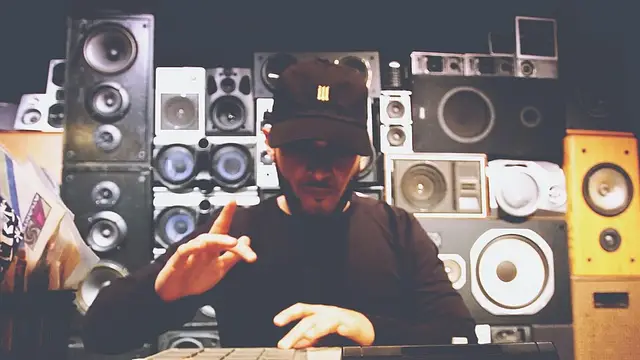
Cities outside New York — Atlanta, Houston, Detroit, Los Angeles, Chicago — developed distinct MPC-rooted production aesthetics, each reflecting local sonic traditions and community values. The physical ritual of the machine — hands on pads, fingers reading velocity, muscle memory encoding groove — made producers into instrumentalists in the fullest sense. Independent labels and tape distribution networks in the 1990s became viable partly because the cost of production had been compressed into a single device that one person could own and master.
The Global Inheritance: How the MPC's Logic Traveled Beyond Hip-Hop's Borders
Grime producers in early 2000s East London inherited MPC sequencing logic and applied it to accelerated tempos and distinctly British sonic vocabularies, demonstrating how the machine's grammar could carry entirely different cultural accents. Afrobeats and Afropop producers across Lagos, Accra, and Nairobi integrated pad-based sequencing into workflows already shaped by highlife, jùjú, and gospel traditions. The machine had become a shared dialect.
The software instruments dominating production studios today — Maschine, Ableton's drum rack, FL Studio's step sequencer — are architectural descendants of the MPC's interface philosophy. International producers who learned beatmaking through MPC-influenced software carried forward a methodology developed on Bronx block party sound systems, creating a lineage that connects those early outdoor gatherings to studios on every inhabited continent.
What the Machine Meant: Technology, Authorship, and the Politics of Sound
The legal battles that erupted around sampling — ignited by cases like Grand Upright Music v. Warner Bros. Records in 1991 — exposed how copyright systems built around individual authorship struggled to account for a Black musical tradition built on collective memory and transformation. A producer who chops, sequences, and arranges is making decisions of melody, harmony, rhythm, and emotional arc, yet the title of producer long carried less institutional prestige than musician or composer.
The oral and communal transmission of MPC technique — through mentorship, open studio sessions, and eventually online tutorials — replicated the apprenticeship models of jazz and gospel without requiring institutional access. The enduring power of MPC-rooted production is evidence that the device did not create hip-hop's aesthetic logic. It gave that logic a machine to live inside, and in doing so made it audible to the world.

Share
Sign in to join the conversation. Sign in
No comments yet. Be the first to share your thoughts.