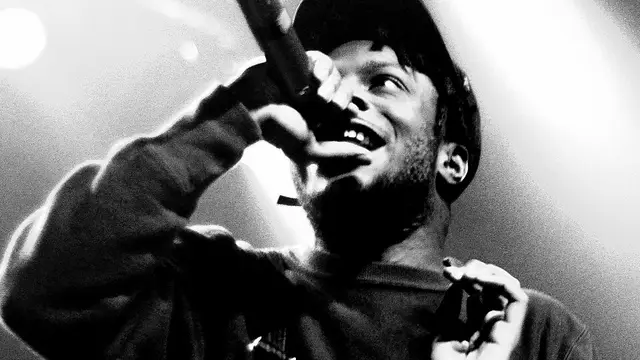
Imagine surviving a private violation made public — a moment of intimacy stripped of context and circulated without your consent — and then being asked, implicitly or directly, to perform gratitude for the cultural conversation that follows. This is approximately where Isaiah Rashad landed after a private video leaked in 2022, forcing a disclosure he hadn't chosen, on a timeline he hadn't set, in a genre that has historically been ungenerous with exactly the kind of complexity he embodies. What followed wasn't simply a public reckoning with sexuality. It was a diagnostic episode that exposed something structural about how hip-hop has always distributed grace — and how unevenly that distribution falls.
When Rashad, a Chattanooga-born lyricist whose catalog runs dense with interiority and emotional precision, acknowledged his bisexuality and remarked that the cultural latitude extended to certain peers hadn't been extended to him, some framed the observation as sour grapes, others as courageous candor. It was neither purely personal nor simply grievance. It was a precise reading of a structural condition — one that has shaped the lives of queer Black artists in hip-hop across decades, long before Rashad and long before the language for naming it became widely available.
An Unequal Welcome: What Rashad's Experience Reveals
Rashad's observation about unequal treatment invites a question hip-hop culture rarely wants to answer directly: what determines who receives grace in this genre, and who absorbs the punishment for the same disclosure? The question resists comfortable answers because the criteria at work are never officially stated. They're encoded in industry behavior, fan reaction, critical framing, and the slow accumulation of precedent — all of which quietly determine whose queerness is welcomed as narrative and whose is treated as liability.
Acceptance in hip-hop, as Rashad's experience makes visible, is stratified. It tracks with commercial stature, with genre proximity, with whether an artist's queerness reads as safe — legible enough to mainstream audiences that it can be absorbed without disrupting existing revenue structures or challenging the genre's foundational mythology around Black masculinity. An artist with a certain market footprint, a certain critical halo, a certain relationship to whiteness and pop accessibility, will navigate disclosure differently than one without those insulations. That is not an incidental pattern. It is a system.
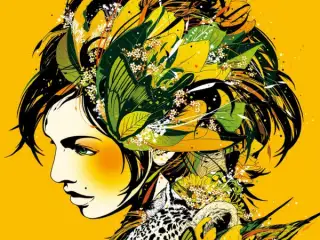
*IT'S BEEN AWFUL* sits inside this context as both creative response and historical document. It is music made in the aftermath of unwanted exposure, shaped by the psychological weight of having one's private life become public property without consent. But it is also the continuation of an artistic project that began years earlier — one defined by a refusal to flatten experience into digestible narrative. Rashad's story is not singular. It is a window into a structural condition that has shaped queer Black artists across hip-hop's entire arc.
Hip-Hop and Queerness: A Non-Linear History
Hip-hop's relationship with queer identity has never moved in a clean line from hostility to acceptance. What the genre's history actually shows is something more fractured: moments of genuine openness punctuated by forceful closures, celebrated exceptions never allowed to become precedents, and an ongoing tension between the genre's democratic origins and the masculine hierarchies that shaped its commercial development. The homophobia embedded in certain strains of hip-hop culture didn't emerge in a vacuum — it reflected and reinforced much larger anxieties about Black masculinity in the American cultural imagination, anxieties the genre both inherited and amplified.
Artists like Big Freedia, Le1f, and Cakes da Killa built significant and sonically influential bodies of work within hip-hop and its adjacent spaces, yet were consistently sidelined from the genre's central conversation even as their influence circulated widely — absorbed into mainstream aesthetics without credit, celebrated in underground communities while rendered invisible by the industry's official gatekeepers. This pattern of influence without recognition is itself a form of structural violence, one that extracts cultural value while withholding institutional support.
Frank Ocean's 2012 Tumblr letter — carefully crafted, deliberately timed — represented a watershed moment, celebrated widely by the industry and critics alike. But the conditions that made Ocean's disclosure receivable were highly specific: his relationship to Def Jam, his connection to Odd Future, his critical darling status, and the particular aesthetic register of his work all converged to produce a reception that couldn't be generalized. His experience was exceptional, and it remained exceptional — a celebrated opening that didn't widen into a changed landscape.
Lil Nas X demonstrated a decade later that visibility was achievable with sufficient provocation and media savvy, but also that Black queer artists are routinely required to perform their queerness on terms the industry finds legible or marketable — terms that often favor spectacle over interiority, confrontation over complexity. The pattern across these decades is consistent: celebrated exceptions appear, generate conversation, and then fail to become structural change. The openings close rather than widen.
The Specific Weight of Black Bisexuality
Bisexuality occupies a distinct and often more contested space than gay identity within both hip-hop culture and broader Black community discourse. It is frequently treated not as a stable identity but as a transitional state — a phase, a performance, a form of hedging — and that skepticism intensifies considerably for Black men navigating hip-hop spaces where masculine legibility is under constant surveillance. The burden on a bisexual Black male artist is not simply to come out but to convince a skeptical audience that there is something real and durable to come out as.
The "down low" narrative — a media and cultural framework that gained particular traction in the early 2000s — did lasting damage to how Black male bisexuality is culturally understood. Rather than treating bisexuality as an identity, that framework pathologized it as deception: characterizing Black men who had relationships with both women and men as fundamentally dishonest rather than complex. That framing didn't disappear. It became sediment, and artists like Rashad inherit its weight whether they choose to or not, regardless of how openly or honestly they present themselves.
Rashad's Chattanooga roots and his long affiliation with Top Dawg Entertainment situate him within a specific Southern Black cultural context where negotiations around masculinity, faith, and sexuality carry particular texture. This is not a context in which queerness has historically been invisible — it has always been present — but one in which the terms of its visibility are carefully managed, often within the family, within the church, within community structures that have their own complex relationships to openness and silence. That context shapes the specific quality of what Rashad's disclosure cost and what it continues to cost.
Unlike gay identity, bisexuality doesn't offer hip-hop's gatekeepers a clean narrative category. The genre has historically been most comfortable with legible, containable versions of difference — queerness as spectacle, as clearly delineated identity, as something that can be named and filed and managed. Bisexuality resists that containment. And the involuntary nature of Rashad's disclosure — a leaked video, not a prepared letter, not a coordinated rollout — compounds everything, adding a dimension of violation that complicates any attempt to read his visibility as chosen or empowered.
*IT'S BEEN AWFUL* as Witness and Resistance
The music industry and critical press have well-worn frameworks for artists who survive personal crises: the comeback narrative, the redemption arc, the triumphant return. *IT'S BEEN AWFUL* refuses all of it. The title alone is an act of resistance — a blunt insistence on the reality of what the preceding period actually cost, delivered without the softening gesture toward silver linings the industry tends to demand from artists who have survived their own exposure. It is not a record that asks to be forgiven or celebrated. It is a record that asks to be believed.
Rashad's artistic voice was established long before this album. *Cilvia Demo*, released in 2014, and *The Sun's Tirade*, released in 2016, both demonstrated a lyrical sensibility oriented toward interiority — toward the granular texture of emotional experience rather than the clean surface of quotable bravado. His work has always resisted reduction. *IT'S BEEN AWFUL* extends that trajectory into rawer emotional territory, not as a departure from earlier work but as its logical continuation under conditions of acute pressure.
What the album does with queerness is particularly significant. It doesn't isolate that experience as a theme, doesn't construct a dedicated confessional space for it, doesn't offer the listener the comfort of a clearly labeled narrative. Instead, the record weaves shame, desire, faith, and survival together into something that more accurately reflects how those things coexist in a life — inseparable, mutually informing, impossible to extract from the broader texture of Black Southern experience. This is not an album about being queer. It is an album about being alive, in which queerness is one of many dimensions of that aliveness.
Hip-hop's critical infrastructure tends to struggle with music that refuses easy narrative closure. The press cycle wants an arc. The cultural conversation wants resolution. *IT'S BEEN AWFUL* offers neither, and that refusal is itself meaningful. Future listeners who return to this record will find not the resolution of a cultural moment but the truth of what that moment felt like from inside it — and that is a more durable form of artistic value than any comeback story could provide.
Who Gets Grace: The Politics of Hip-Hop's Selective Acceptance
Rashad's direct invocation of unequal treatment demands that the criteria governing hip-hop's tolerance be examined honestly rather than euphemistically. Commercial scale is among the most significant. Artists whose queerness can be absorbed without threatening major label revenue streams, without alienating radio programmers, without disrupting the carefully managed identities that make artists commercially viable — those artists are more likely to receive institutional support and critical cover when they disclose. The math isn't hidden. It simply isn't named.
Genre proximity matters in related ways. Artists who operate closer to pop, R&B, or alternative rap have historically had considerably more room to express queer identity than those whose core audience and aesthetic identity are rooted in hip-hop's harder, more masculinist traditions. The further an artist sits from those traditions, the more room exists for deviation from them. Rashad's work is rooted in rap in a way Ocean's has never quite been — and that proximity to the genre's traditional core is part of what shapes the different reception each has received.
The performance of queerness matters as well, in ways that reveal something uncomfortable about whose acceptance counts. Visibility that is aestheticized, provocative, or legible to white liberal audiences tends to be rewarded differently than queerness that is understated, Southern, or embedded in Black working-class experience. The industry and the critical press are more comfortable with queer identity as spectacle — something that announces itself clearly, that fits existing templates — than with queer identity as one dimension of a fully inhabited life. Rashad's version is the latter, and the reception has tracked accordingly.
The selectivity of hip-hop's acceptance ultimately functions to protect the genre's investment in a specific construction of Black masculinity — one that can tolerate queerness as exceptional spectacle while resisting it as ordinary, everyday reality. The celebrated exception becomes the mechanism by which the norm is preserved: point to the exception, and the norm can claim openness without actually changing. This is not an accident. It is a structural feature of how tolerance operates within hierarchical cultural systems, and hip-hop is not unique in employing it.
Where the Ground Actually Stands
The language of hip-hop "evolving" or "opening up" is seductive and frequently misleading. It protects the industry's self-image without necessarily protecting the artists most vulnerable to harm. When the genre points to its visible queer figures as evidence of progress, it often does so while leaving intact the label infrastructure, the management culture, the radio gatekeeping, and the fan dynamics that continue to make disclosure a calculus of risk rather than a neutral act. The celebration of progress can function as a substitute for the substance of it.
The global dimensions of this conversation deserve acknowledgment. Hip-hop is not an American genre that happens to be exported. It is a world genre remade by communities across Lagos, London, São Paulo, Seoul, and hundreds of other cities between. The norms it carries around Black masculinity and queerness travel with it and are contested in those contexts — transformed, resisted, and negotiated by local queer Black artists navigating their own versions of this tension. What happens inside hip-hop's American center is not contained there.
Younger generations of listeners who have grown up with more visible queer representation in music are sometimes offered as a natural solution — as if demographic change in fan bases will automatically produce structural change in the industry. But fan bases and critical communities can be significantly more accepting than the label executives, managers, radio programmers, and playlist curators who continue to hold real power over which artists are heard and how they are positioned. Listener tolerance does not automatically translate into institutional change, and conflating the two obscures where the real leverage points are.
What would it mean for hip-hop to extend grace not as an exception but as a baseline — not as a reward for managing one's queerness in commercially legible ways, but as a condition that doesn't have to be earned? The answer requires naming what would have to shift: label risk culture, the economics of radio, the masculinist traditions that certain fan communities have made central to their identities, the critical infrastructure that still defaults to respectability when evaluating queer Black artists. These are not small adjustments. They are the architecture of the problem.
Isaiah Rashad's place in this history is not as a symbol of failure or as evidence of progress. It is as an artist who made work of genuine weight under conditions of genuine difficulty — who continued building a body of work defined by emotional precision and artistic seriousness while navigating a public violation he didn't choose and a cultural conversation he didn't initiate. His experience illuminates truths about hip-hop's conditional tolerance that the genre has not yet fully reckoned with. The reckoning, when it comes, will owe something to the fact that he told the truth about what it cost.

Dela
Logga in för att delta i samtalet. Logga in
Inga kommentarer ännu. Var först med att dela dina tankar.