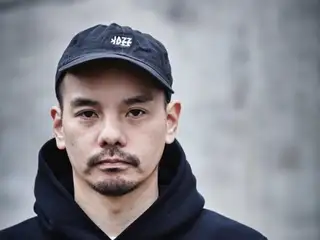
'Displacement, for artists who metabolize it consciously rather than simply endure it, tends to generate a particular kind of freedom: freedom from obligation to any single tradition, from the anxiety of living up to a canon that was never quite yours to inherit. The history of diaspora music is full of this dynamic: musicians building new languages precisely because they belonged to no single one, finding in that rootlessness not an emptiness but a generative space. Choulai's biography forces a version of this conversation that global music discourse has not yet fully had, namely one that runs north to south across the Pacific rather than east to west across the Atlantic.'
'Beatmaking, at its core, is a practice of listening. Chopping, looping, and layering recorded sound demands close attention to texture and time that maps directly onto the jazz improviser's sensitivity to space and rhythm. Where many jazz-adjacent producers use hip-hop aesthetics as surface decoration (a contemporary gloss over essentially traditional structures), Choulai treats the two practices as sharing a root system.'
'Labels founded by musicians rather than industry figures tend to carry a different relationship to catalogue and community. The label becomes an extension of artistic practice rather than a commercial frame built around it, which means the decisions it makes (who to sign, what to release, how to present the work) reflect aesthetic and ethical values rather than market calculations.'
Operating outside New York, London, and the European festival circuit that defines much of the genre's critical conversation is both a constraint and a freedom.'
'The margins of Tokyo's jazz scene, not the prestigious heritage venues but the smaller, stranger spaces where fewer reputations are at stake, have historically been where the music's most generative mutations occur.'
'Papua New Guinea's stringband tradition offers a model of musical creolization that resonates structurally with what Choulai does compositionally. The stringband emerged through the 20th century as Melanesian communities took the acoustic guitar, an introduced instrument, and bent it toward local stories, local rhythms, local social purposes.'
'Musical memory is not always conscious or programmatic. It lives in rhythmic sensibility, in the social understanding of what music is fundamentally for, in the texture of how a musician instinctively relates sound to space and community. Choulai has never described Papua New Guinea as a direct compositional influence in the way that a musician might cite a specific record or a specific teacher. But the way he understands music as a collective and social act, with the communal always structurally present in his work, speaks to a formation that runs deeper than conscious reference.'
'Choulai's dual practice, performing and producing, playing and building community, reflects a model of artistic citizenship that treats the health of a scene as inseparable from individual creative development. This is not a new idea, but it becomes more visible and more urgent in contexts where the scene cannot be taken for granted, where it must be actively made and sustained. In Tokyo, far from any of the cities that jazz criticism considers its natural home, a Papua New Guinea-born musician has built something that did not previously exist — a gathering point for a particular kind of seriousness about what music can do when it refuses inherited boundaries.'

Share
Sign in to join the conversation. Sign in
No comments yet. Be the first to share your thoughts.